
Read Wayne County's Owner Record
The Wayne County parcel card lines up the indexed owner with the property address. It also lists the parcel number, account number, deed reference, legal description, tax year, values, and sales history. That name is the owner of record. The assessment system carries it for that parcel and tax year. It may be one person or co-owners. It may also be an estate, a trust, or an entity. Occupancy is a different question. The card never says who lives in the building. Its deed book and page give the strongest bridge to the instrument that placed that name in the county record.
| Owner name | The person or entity indexed for the current tax-year card |
|---|---|
| Co-owner | A second indexed party when the record supplies one |
| Mailing address | Where assessment and tax notices are sent |
| Situs address | The physical location assigned to the parcel |
| Deed reference | The book, page, or deed number leading to the transfer record |
| Tax year | The assessment period represented by the displayed card |
A sample parcel card shows why each field needs its own job. Its situs sits inside Wayne County. Its mailing destination lies outside Indiana. That split tells you only where notices go, not who lives there or controls the site. Wayne County notes that parcel data is compiled from deeds, plats, and public records and should be checked against original sources. Date any owner result you save. The official parcel-card page displays this sample record.
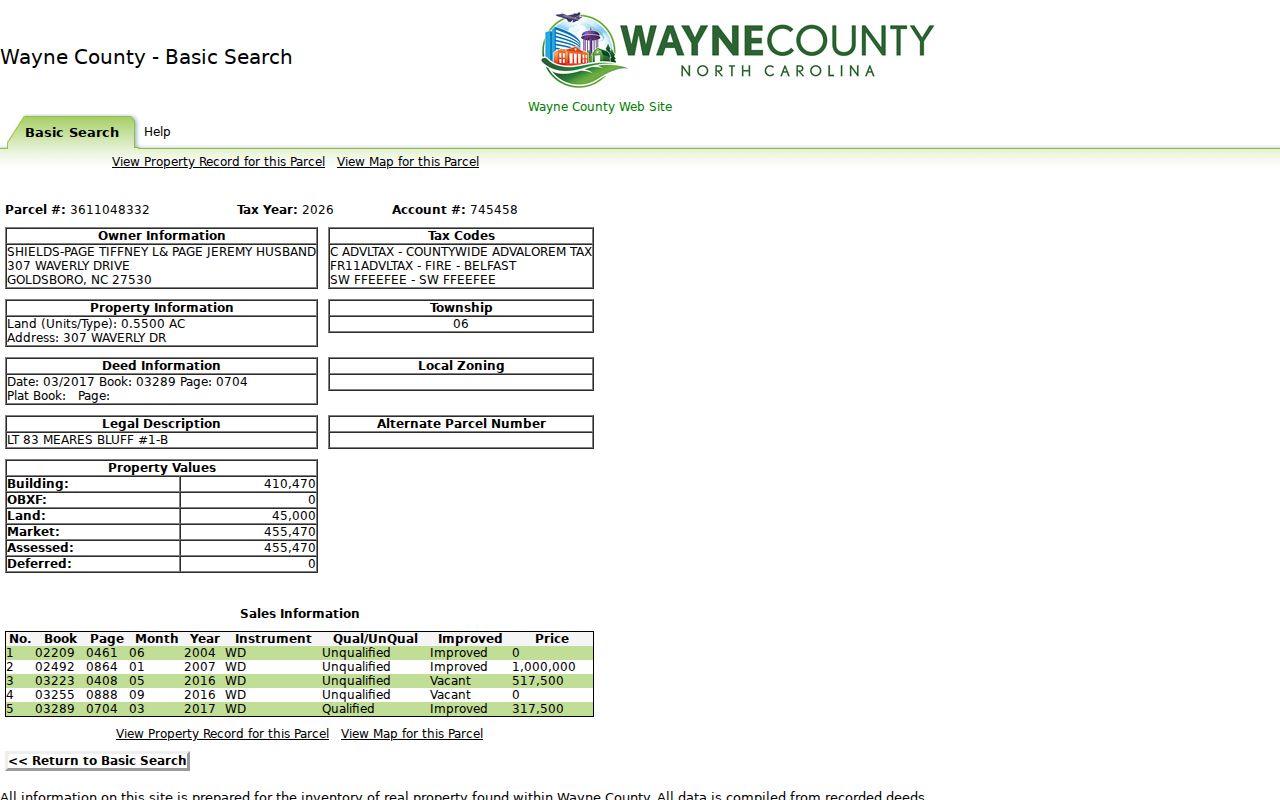
Owner name, parcel, mailing, and deed reference belong together.
Match Wayne County Parcel IDs
A name match is weak. Wayne systems may show a county parcel number, account number, GIS PIN, PARCELID, tax ID, deed number, or an alternate identifier. Splits, combinations, replats, annexations, tax halves, and condominium units can create new identifiers. Compare the legal description and situs address before calling two displays the same land. The assessor search takes exact or beginning-of-number parcel searches. GIS exposes an 18-character PIN and a 15-character PARCELID. Keep both when they appear. Follow the parcel, not a similar street name or a familiar surname.
Date Wayne County Owner Results
Assessment, GIS, and deed systems refresh on different schedules. Wayne real property is assessed on January 1. The parcel card also names its tax year. A deed recorded after that snapshot may show up in Doxpop before the assessor roll catches up. The reverse happens too. A county workflow can post a transfer reference while the instrument image is still being checked.
Write down the search date, displayed tax year, deed book and page, sale date, and recording date. Those dates explain apparent conflicts. No guessing is needed. A fresh deed may name the new grantee while an older mailing name sits on another layer. The most recent operative instrument for the same legal parcel settles the question, not whichever screen looks newest.
Note: A Wayne County tax-year label and a deed recording date describe different events, so compare both before resolving any owner conflict.
Check Wayne County's Owner Layer
The county parcel-owner polygon layer offers a second view of the current record. The published fields cover ownership and the parcel alike. They include OWNERNAME, situs components, billing address lines, PIN, PARCELID, legal description, deed number, acreage, active status, improved status, and tax fields. Query the identifier saved from the card. Then compare owner spelling, parcel shape, street, and legal text. The service page publishes the full field schema.
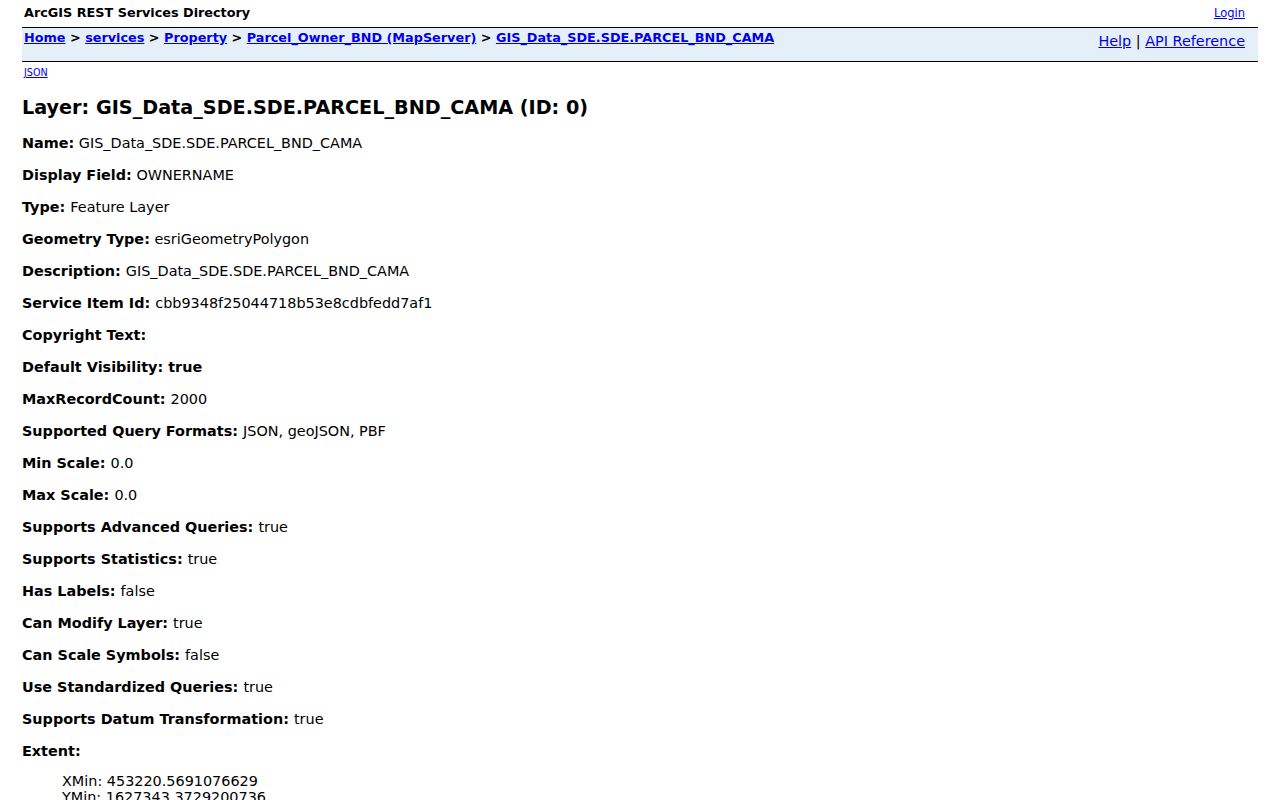
The schema corroborates what the card shows. Still, a GIS attribute is neither a recorded conveyance nor a title opinion.
Verify Entity Owners in Indiana
The owner field may name an LLC instead of a person. Run the exact name through the Indiana business search. Variants, punctuation, and assumed names matter. The business record may show status and a registered agent. That agent is a statutory contact, not the owner. Trusts and estates need different care. A trustee may take title in a representative role. An estate transfer may link to a probate case. It may also involve a personal representative's deed or a later distribution. Treat Indiana MyCase only as a case lead. Then return to the Wayne County Recorder for the operative property instrument. Never swap the deed's grantee for an inferred beneficiary or family member.
Verify Wayne County's Current Owner
The assessor card answers who Wayne County currently indexes. The Doxpop Wayne Recorder index supplies the recording trail. Wayne's online index begins in January 1994, with scanned images from April 2000. Test a current transfer by matching its grantee, legal description, recording date, and book/page or instrument reference to the same parcel.
- Open the Wayne real-estate card and save the owner name, parcel identifiers, situs, legal description, and deed reference.
- Search the Wayne Recorder index for the name and locate the latest deed involving the same legal parcel.
- Read the grantee and the way title is stated. Check later deeds, court orders, affidavits, or tax-sale instruments.
- If an entity appears, confirm its exact Indiana business name without treating its registered agent as the landowner.
- Owner of record
- The party carried as owner in an official parcel or recording system.
- Vesting
- The wording that states how a grantee holds title.
- Grantee
- The party receiving an interest in the recorded instrument.
- Registered agent
- A business's official service contact, not proof of personal ownership.
Check Wayne County Sale Events
A winning bid at a Wayne County delinquent-tax sale does not crown a new owner of record. The county's annual sale process moves in stages. A certificate comes first. A redemption period follows. Only later does a deed or a county-held disposition complete the transfer. This happens if the parcel goes unredeemed. Foreclosure runs on its own track, through a separate court case and recording trail. Before changing any owner conclusion, line up the records. Match the tax-sale notice, the court case, the recorded instrument, and the updated parcel card.
Sheriff's sales, quiet-title cases, and estate matters deserve the same caution. A filing opens a process. Its final result may not appear in the case file. Check public case details through Indiana MyCase. Then ask the Wayne County Clerk for the authoritative file. Or ask the Recorder for the recorded transfer.
Wayne County Deed Alert Limits
In February 2024, Wayne County announced a free Doxpop Property Fraud Alert service. Enrollment lets a person watch a name. It sends an early warning when a matching filing hits the deed records. The alert is only a signal. It cannot block a document from being recorded. It also cannot prove fraud, or substitute for reading the deed itself. As a currentness check, though, it earns its keep when a disputed filing could affect the owner of record.
The county says enrollment takes under five minutes. Add name variants, especially for co-owners and entities. If an alert arrives, pull the instrument and contact the Recorder. A matched name alone does not mean the watched parcel changed hands.
Contact a Wayne County Owner
A tax mailing address is a public notice destination. It can also work as a practical channel for a parcel-related letter. Keep the message about the property itself. A billing city that differs from the parcel's location tells you nothing about where the owner lives. So resist building a personal profile from it. Indiana's Address Confidentiality Program gives qualifying people a substitute address with mail forwarding. That is worth knowing before you assume any address is residential.
Lawful use. A Wayne County current owner lookup supports property research and due diligence. Never use owner data to harass, intimidate, stalk, or defeat a protected address.
Need a record for a transaction, dispute, or court filing? Request a certified deed from the Wayne County Recorder. The office holds instruments dating to 1811. It issues certified copies for its current fee. Certification authenticates the office's copy of the deed records, so the document carries official weight wherever you file it.